
 +86-13634185427

How to interpret the relationship between breathability, moisture permeability and water resistance?


How Are Breathability, Moisture Permeability, and Water Resistance Connected?
How Do These Three Attributes Influence Each Other?
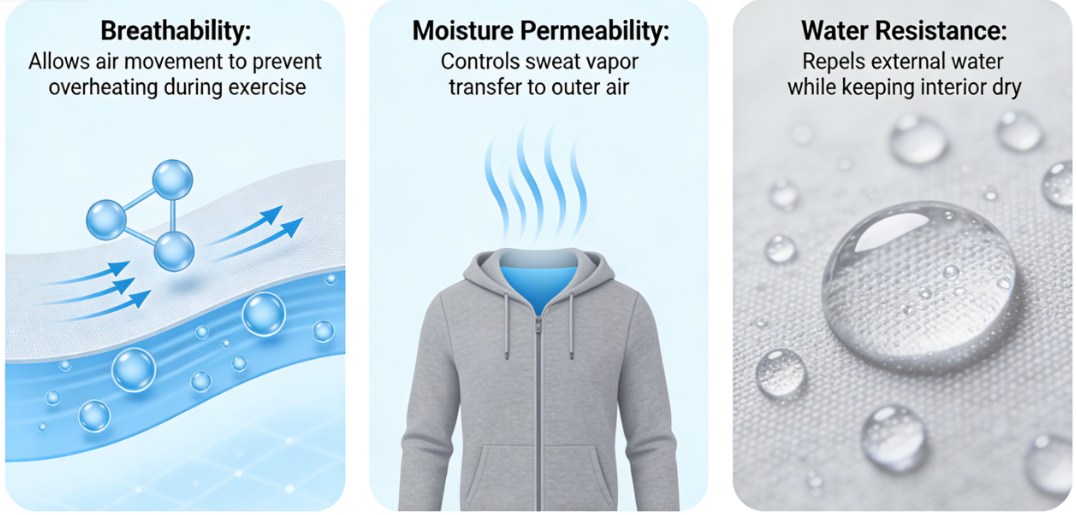
The connection among breathability, moisture permeability, and water resistance shapes the comfort and effectiveness of today’s fabrics. Breathability lets air move through a material. This prevents overheating and keeps users comfortable during exercise. Moisture permeability controls how well sweat vapor leaves the inside of clothing for the outer air. Water resistance checks how well a fabric pushes away outside water. At the same time, it keeps the inside dry.
Finding balance for these three qualities matters a lot. Boosting one trait can impact others. For instance, adding coatings or membranes to improve water resistance might lower breathability if not done with care. Double-layered fabric includes an outer layer and a waterproof, breathable membrane. They bond together using heat. This setup provides water resistance. Yet, it does not fully harm moisture permeability. In the same way, the top layer blocks wind, repels water, and allows air through. Such multi-layer builds make clothes work in different weather. They also let sweat escape.
At INVIDIA TEXTILE, we grasp this fine balance well. Our fabrics come from nature’s finest choices. We pick them by hand. They protect from the sun. They keep you warm in winter. And they endure over time. We add modern membrane tech to our seam-taped jackets. This creates the best mixof breathability and water resistance.
What Does Breathability Really Mean in Outdoor Fabrics?
What Factors Affect a Fabric’s Breathability?
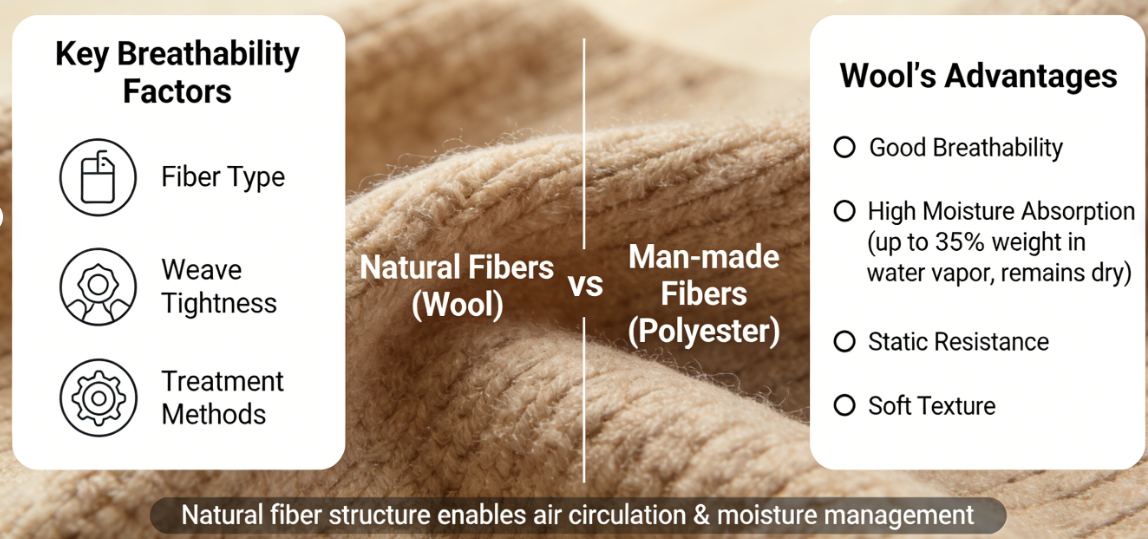
Breathability relies on linked elements like fiber type, weave tightness, and treatment methods. Natural fibers such as wool often give better air flow than man-made ones. Wool clothes beat polyester in several ways. They have good breathability. They absorb moisture well (up to 35% of their weight in water vapor while staying dry). They resist static. And they feel soft. This natural makeup lets air pass easily. It also handles moisture properly.
Weave pattern matters greatly too. Tight weaves cut down on air flow. But they boost water resistance. Loose weaves improve air movement. However, they might weaken rain protection. Outside factors like humidity or temperature also change how fabrics breathe when worn.
At INVIDIA TEXTILE, we craft each jacket with careful focus on purpose. Add features like waterproofing, UV protection, or insulation to your jackets. We adjust materials based on local weather or user demands. This way, we deliver steady comfort in all our items.
How Does Moisture Permeability Improve Wearing Comfort?
How Does Moisture Permeability Contribute to Comfort?
Moisture permeability plays a key role in controlling body heat. It lets sweat vapor go through fabric layers. This stops it from building up inside clothes. Such ability helps keep body temperature even. It works during effort or changing weather.
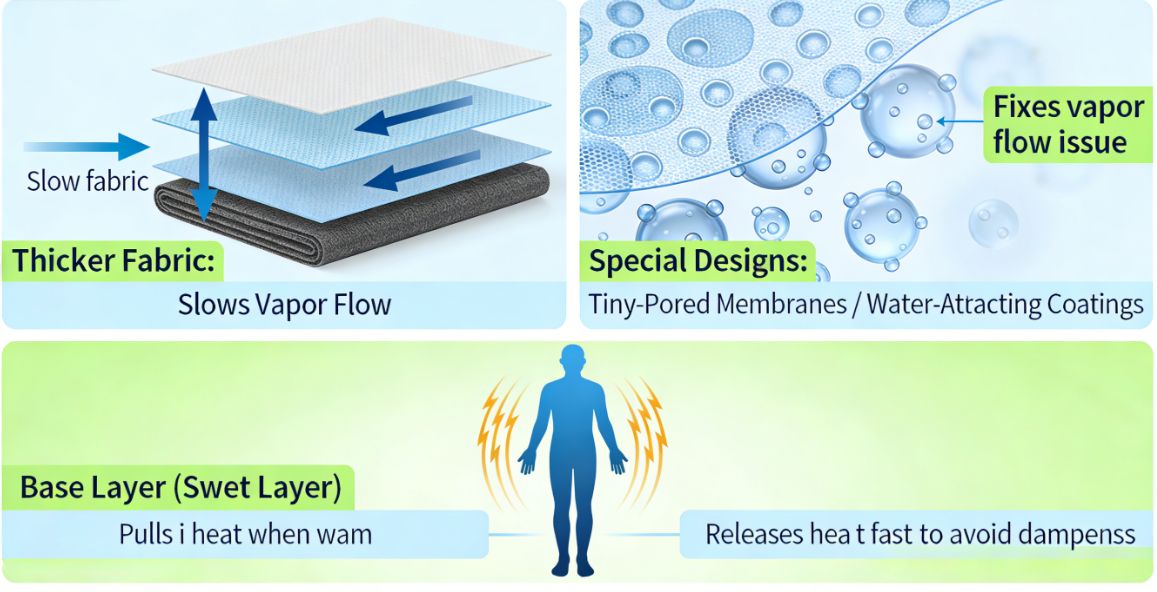
Fabric thickness and moisture permeability link in an opposite way. Thicker parts often slow vapor flow. But special designs like tiny-pored membranes or water-attracting coatings fix this. The layer nearest the body is the sweat layer or base layer. It pulls in heat from the body when warm. Then it releases it fast. This process avoids unease from stuck dampness in clothing setups.
To measure moisture permeability in a proper way, tests check water vapor transmission rates (WVTR). These checks show how well fabrics handle inside moisture in set conditions. They serve as a vital sign for outdoor clothing results.
At INVIDIA TEXTILE, we build detailed testing into all production steps. Every jacket faces a series of checks. These cover leak-proofing to strength tests. So, our clothes work well in real life. They also keep good moisture handling.
How Does Water Resistance Protect You in Wet Conditions?
What Determines the Level of Water Resistance?
Water resistance comes from both material makeup and surface finishes. Coatings like polyurethane (PU) or fluorocarbon treatments form shields. They block liquid entry. Yet, they permit some vapor passage. Membrane tech, such as small-hole films, boosts defense. It does so without greatly limiting breathability.
Tests like hydrostatic head checks find out how much pressure a fabric holds before water leaks. Seams in normal clothes get sealed tight during making. Still, wind and water can slip through. So, seam taping is vital. It closes stitch holes that could harm waterproof strength.
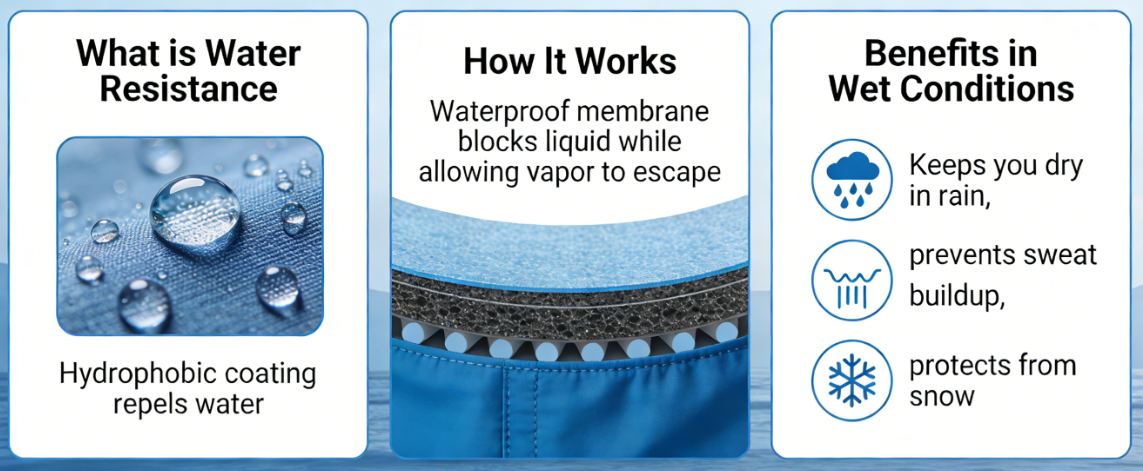
For example, three-layer seam-sealed rain jackets fix issues from two-layer ones. Those older versions felt sticky against skin. This new design cuts that problem. It also raises lasting power in wet settings. Many INVIDIA TEXTILE items use this method.
We focus on making jackets that mix strong tech with nice looks. As top OEM jacket makers, we ignite ideas. Pick from our large set of jacket styles. Or we can turn your bold ideas into reality. Our skills make sure each item gives great results in all weather types.
INVIDIA TEXTILE’s Approach to Fabric Innovation
How Does INVIDIA TEXTILE Integrate These Attributes into Their Products?
At INVIDIA TEXTILE, new ideas start with knowing what users need in varied places. These range from city travel to hill walks. Our view focuses on blending fact-based work with skilled making.
For 15 impressive years, INVIDIA TEXTILE has served as a key partner for brands wanting jackets. These mix high quality with eye-catching style. We work hand-in-hand with clients via OEM services. We adjust every detail. This includes picking materials to exact colors. It ensures strong brand match plus top tech results.
Our seam-taped jackets show this blend plan. They use layered membranes. These handle moisture shift well. At the same time, they stop outside rain. Plus, items like our parkas and puffer jackets show how filler layers work well with air-permeable covers. This brings comfort all year.
We welcome your own ideas. We can adjust to your needs. This custom focus shapes how we build truly fitting outerwear. It suits work, trips, hikes, or daily outings.
Through ongoing study and test loops in our factory setup, backed by expert workers, we hold firm quality levels. These appeal worldwide to top clothing brands. They seek trust combined with fashion.
FAQ
Q: What is the difference between waterproof and water-resistant fabrics?
A: Waterproof fabrics provide complete protection against water penetration, while water-resistant fabrics can resist water to a certain degree but are not entirely impermeable.
Q: How can I test the breathability of a garment at home?
A: One simple method is to wear the garment during physical activity. If moisture builds up inside, it may lack adequate breathability.
Q: Why is moisture permeability important in outdoor clothing?
A: Moisture permeability is crucial as it helps manage sweat evaporation, keeping you dry and comfortable during outdoor activities by preventing moisture build-up inside the garment.
