
 +86-13634185427

What Are the Pros and Cons of Waterproof Zippers vs Reverse Zippers for Clothing?


Why Are Waterproof Zippers Used in Outdoor and Performance Clothing?
What Are Waterproof Zippers and How Do They Work?
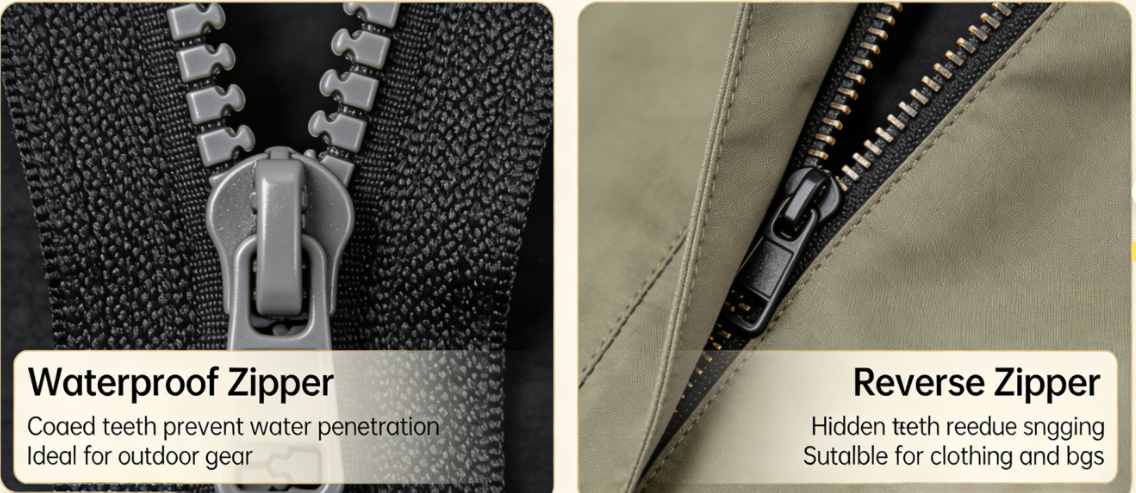
Waterproof zippers are designed to stop water from leaking through the teeth or tape of a zipper. This keeps garments dry in damp settings. Their operation relies on unique coatings and sealing methods that block liquid entry. Waterproof zippers are designed to reduce water penetration through the zipper area, helping garments perform better in wet conditions. Their construction usually relies on coated zipper tape, tighter sealing, and water-resistant surface treatments.
Manufacturers often use polyurethane-coated tapes, plastic teeth, or metal parts with rust-proof treatments for waterproof zippers. These choices offer good bendability along with strong defense against dampness.
Waterproof zippers suit many uses, especially in outdoor clothes like rain jackets, ski outfits, and hiking gear. Double-layered fabric has an outer layer and a waterproof breathable film joined by heat. This setup works well with waterproof zippers. It gives full guard against rain and wind. At the same time, it allows air flow.
Advantages of Using Waterproof Zippers in Clothing
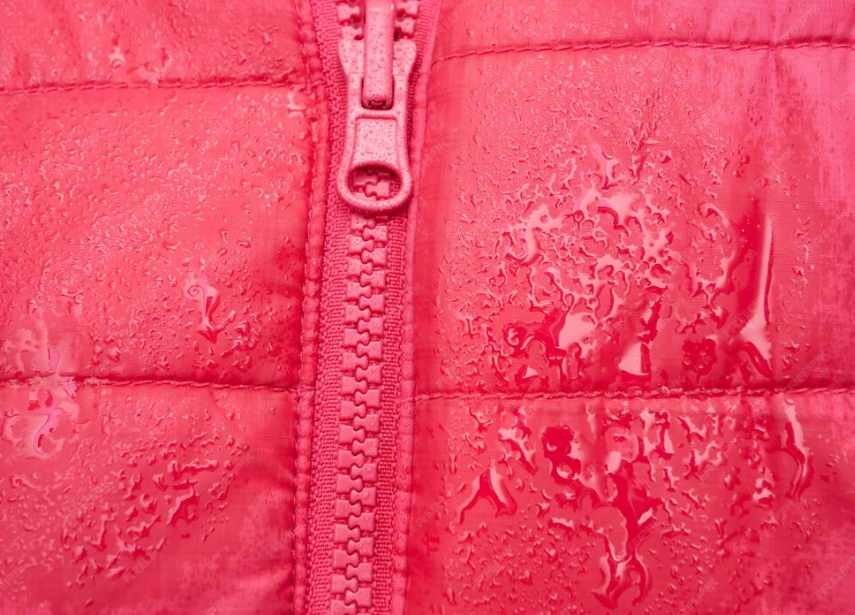
The key benefit of waterproof zippers is their strong shield against water entry. They help improve weather protection in heavy rain or snow, making them a practical choice for outerwear used in demanding outdoor conditions. The core roles of this layer include blocking wind, repelling water, and letting breath through. So, they are vital for outdoor fans who need reliable equipment.
Another plus is better clothing longevity. These zippers avoid rust or jamming after long contact with water. Thus, they lengthen the life of apparel items. Their sturdy build also handles regular use without losing quality.
Waterproof zippers fit outdoor and sports clothes well. They blend smoothly with other weather-proof traits like taped seams or breathable films. Taped seams mix good looks and style. Yet, the main point is their expert take on sports. They consider body fit, the activity setting, and motion paths. When combined with these, waterproof zippers improve both function and style.
Potential Drawbacks of Waterproof Zippers
Though they have strong points, waterproof zippers come with a few downsides. They are often less flexible than standard zippers because of their coating layers and sealing structure. This stems from their coated layers and tight seals. As a result, they feel a bit rigid when you open or close them.
Price is another factor. Making waterproof zippers calls for special materials and steps. These raise production costs over basic types. Plus, these zippers may need careful care, like soft washing, to keep their water-repelling layer intact over time.
Why Are Reverse Zippers Popular in Modern Clothing Design?
What Are Reverse Zippers and How Are They Different?
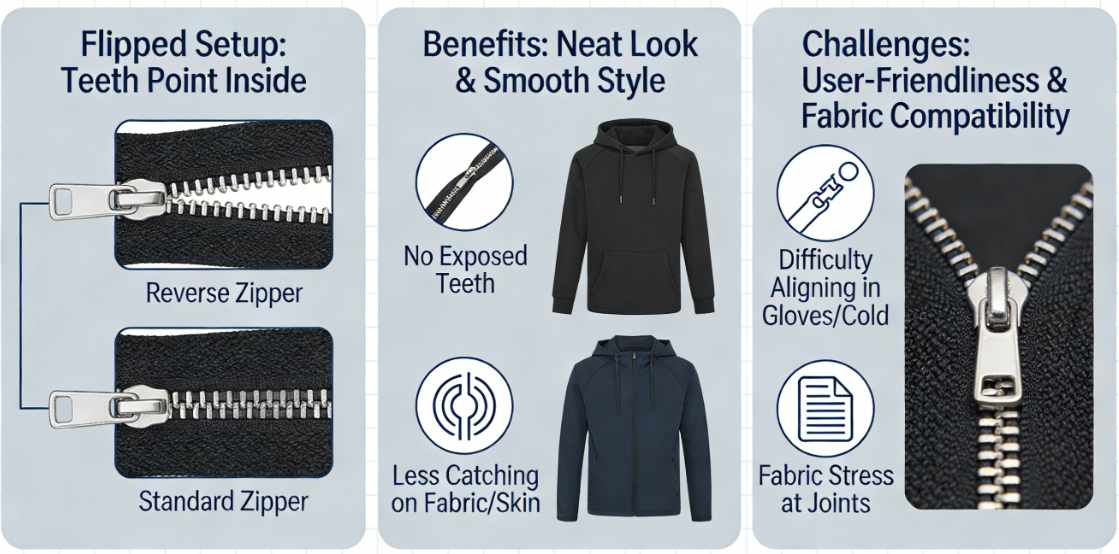
Reverse zippers have a flipped setup where the teeth point inside instead of outside. This setup tucks the zipper coil behind the fabric tape. It creates a flat outer look. Unlike normal designs that show teeth on the surface, reverse zippers give a simple finish. This appeals to current fashion styles.
Their system works much like standard ones. However, reverse zippers are generally chosen more for their clean appearance than for maximum weather protection. The flipped setup also cuts down on visible damage to teeth. Since they stay protected from outer rubs.
Benefits of Incorporating Reverse Zippers into Garments
Reverse zippers give a neat look that boosts clothing style. They hide mechanical parts under fabric. This smooth style matches modern trends that favor straight lines and quiet details.
Another gain is less catching on cloth or skin. This happens because they limit exposed teeth. So, reverse zippers feel comfy in tight clothes like sportswear or chic outer layers.
Designers often use reverse zippers in lines to get clean ends. These suit high-end streetwear or simple outerwear ranges. Their quiet grace helps brands stand out in busy markets.
Challenges Associated with Reverse Zippers
Even though they look great, reverse zippers may not match old styles in user-friendliness. This is true especially when using gloves or in cold weather where hold is key. The hidden coil can make lining up harder when you fasten it.
Further, reverse zippers might not work with every fabric. Soft materials could face stress at join spots if not strengthened well during stitching. So, creators must weigh looks against real use when picking this for certain clothing types.
Comparing Waterproof Zippers vs Reverse Zippers: Which Is Better?
Analyzing the Pros and Cons: When to Choose Each Type?
Selecting between waterproof and reverse zippers hinges on planned use cases. For outdoor items like rain coats or walking jackets that need top weather shield, waterproof zippers win out. They offer sealing power plus wind block from modern lamination methods noted before.
On the other hand, reverse zippers shine in style-focused areas. Reverse zippers are more suitable for style-driven garments, such as fashion outerwear or padded jackets, where a clean silhouette is more important than maximum waterproof performance.
In the end, companies often mix both in their lines. They use waterproof kinds for useful outerwear sets. And reverse types for city life ranges that seek fine looks without losing ease.
INVIDIA TEXTILE’s Offerings in Zipper Technology
Introduction to INVIDIA TEXTILE’s Product Range
For more than 15 years, INVIDIA TEXTILE has worked with brands developing outerwear that combines reliable quality, functional construction, and market-ready design. As top OEM jacket makers focused on custom production worldwide, we blend fresh ideas with exact skills at every step. This goes from idea creation to final delivery.
Pick from our wide set of jacket styles. Or have us turn your bold visions into reality. Our method lets clients guide fabrics, add-ons, shades, size choices, and even supply sources. This ensures steady brand feel across full product groups.
Highlighting Key Products: Waterproof and Reverse Zippers
At INVIDIA TEXTILE, our lineup features strong jackets with fresh zipper tech made for varied market wants. Our waterproof zipper styles use top sealing setups. They ensure no-leak trust in harsh weather. Yet, they keep body-friendly ease during outdoor action.
Features such as water resistance, seam sealing, and insulation are especially relevant in categories like Seam Taped Jackets, where technical performance is a core selling point. Here, style and purpose meet through careful work. We test them hard for lasting strength. This includes checks for no leaks before we send them out.
For style-savvy clients who want smooth ends without seen hardware breaks,reverse zippers are often a good match for categories such as Qulited/Padded Jacket, where visual finish and comfort both matter. These offer polished shapes ideal for city wear sets. They stress simple high-end draw that lasts through season trends worldwide. Such trends catch the eye of picky buyers.
FAQ
Q: What Are the Main Differences Between Waterproof and Reverse Zippers?
A: Waterproof zippers aim to block water entry. This makes them great for outdoor gear. Meanwhile, reverse zippers focus on clean looks. They suit fashion pieces where style trumps weather needs.
Q: Are Waterproof Zippers More Durable Than Reverse Zippers?
A: Yes. Waterproof types show better lasting power in wet spots thanks to guard coatings that boost life span. Reverse models mainly aim at style boosts rather than weather-tough traits in their makeup.
Q: Can I Replace a Regular Zipper with a Waterproof or Reverse One?
A: Whether you can swap depends on the clothing kind and fabric match. Exact fitting decides how well it works. So, expert sewing help is often wise. This ensures the best blend for the planned role in each case.
