
 +86-13634185427

Aerogel Insulation for Clothing: A B2B Guide to Lightweight Warm Apparel


The phrase “warmth with less weight” hits you smartly in an outerwear brief. On its own, it is not a specification for the product. Before a purchaser commits to aerogel insulation for attire the team needs know which type of material is being used, how it will be constructed in their jacket and what criteria they would use to evaluate the ultimate garment. The answer for each question is different.
This is particularly true for lightweight warm clothing. You also mention aerogels for thermal insulation, and some say fragility and even difficulty processing these materials could impede their use in textiles. The idea should be treated by a sourcing team as if it is development until the finished sample has been tested. Just knowing the material name does not indicate how any given jacket will actually perform.
Define Aerogel Insulation for Clothing as a Garment System
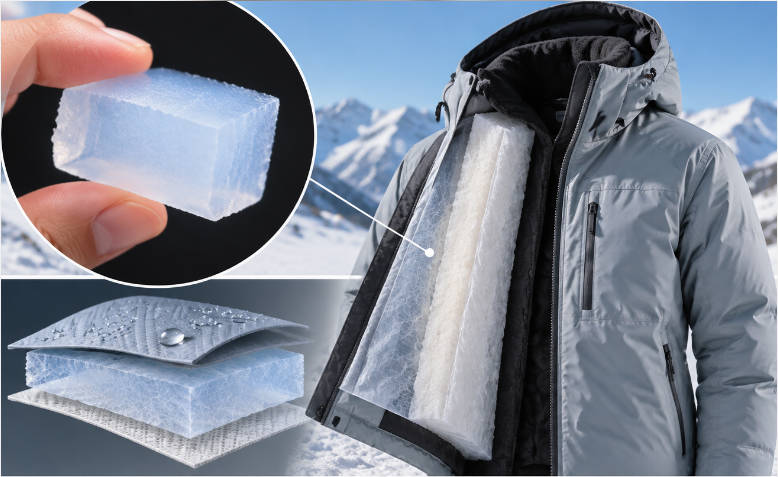
Specify the Material Form and Garment Interface
To kick of the RFQ, question what type is being proposed and where will it sit within the garment. Will it be woven in a textile, encased or utilized as composite panel? The supplier is required to describe the seam edge treatment and notify any restrictions on cutting, quilting or laundering. Enquire how the layer is intended to interface with shell and lining, other insulation on moisture-management construction.
Those are pragmatic questions, not administrative. Though a flexible insert, coated fabric and composite panel have the same material label but they will behave differently in sewing as well as wear. A composite panel, a coated fabric and a flexible insert can carry the same material label but differentiate in behaviour during sewing/ wear.
Compare Complete Prototypes, Not Material Labels
Match completed jackets and their bills of materials. Two proposals might include the word “aerogel,” but those two aerogels may differ in coverage, thickness, stiffness and weight as well as construction. The differences can be felt in the full apparel, but loose swatches won’t show that. In the case of aerogel insulation in clothes, it is not just an insulation sample that buys but also an assembled jacket.
Compare Warmth, Weight and Thickness With Controlled Prototypes
Hold the Main Prototype Variables Constant
Customers often ask a very basic question. They want to know if the jacket can reach the desired warmth level while cutting down on weight. They also want to reduce overall bulk. A single warmth-to-weight ratio does not exist to solve this problem. In addition, no universal warmth-to-thickness ratio can give a clear answer. You need to create comparable prototypes to find out. When making these samples, keep the pattern and the shell exactly the same. The lining and the coverage area must also match. Finally, ensure the major construction details remain as consistent as possible.
Second, the record garment weight and insulation placement (e.g., thicknesses at fixed indicators), following an outlined pattern in testing. It does not say which of the variables resulted in difference when several change between samples. However, when more than one of these variables change between samples it becomes difficult to determine which variable is the cause driving this trend.
Report Thermal Results Within Their Test Conditions
ASTM F1291-22 evaluates insulation in clothing systems at static standing conditions using a heated manikin. Such a result is representative of the tested ensemble in its native environment. It is not a blanket score for all coats made from similar materials. This is not a universal score that applies to any jacket you choose which uses the same fabric.
A report on aerogel insulation for clothing should identify the full ensemble, test conditions and sample configuration. Do not carry a result from one jacket over to a different pattern, activity level or climate without further testing.
Check Breathability, Hand Feel and Layering Comfort
How an Insulated Jacket Should Fit for Layering
Lab warmth does not tell a tester whether a sleeve pulls or a panel feels stiff. To assess how an insulated jacket should fit, have testers bend their elbows, raise their arms and sit down. Repeat the movements over the intended mid-layer. Check the joins between insulated and uninsulated areas as well; a change in thickness can affect movement and comfort.
Measure Evaporative Resistance Separately
A sweating-manikin method for testing the comparative-Evaporative resistance of clothing systems is described in ASTM F2370-22. The result holds for the ensemble tested and settings. At a basic level, breathable fabrics are important but the shell and insulation only as well as lining material & construction also play an important role on how moisture is dealt with in garments. Moisture management is about more than just breathable fabrics, the shell, added insulation layer(s), lining and construction all play a role.
For a breathable insulated jacket, read the lab result alongside hand-feel checks, mobility trials and wear observations. No single measurement covers all of those questions.
Validate Washing and Construction Durability
Define the Wash and Inspection Protocol
Before sampling, agree on the method of care and cycle count/drying procedure and inspection points. Examine for splitting, powder migration, releasing out of the mold and adhesion failure like flaking on surfaces or corners as well as contamination running away from quilted areas. In case of thermal performance being an acceptance criterion, the garment-system test should again be performed after having been washed through the agreed wash sequence. When thermal performance is an acceptance criterion, conduct the same garment-system test following the previously agreed wash sequence
Compare the Same Garment Before and After Washing
Wear the same piece of clothing for both reviews. Since a percentage from some other maintained report or permit brochure does not constitute How this type of made structure performs. Since durability is entirely dependent on the composite, garment construction and care process; therefore record should clearly state what has changed since final approval or whether this sample still meets to either standard.
Build the RFQ, Sample and Test Checklist
Request Material and Processing Information
Ask for the material construction and origins, composition notes; thickness and weight numbers; instructions on how to cut or sew it, storage advice managing care limitations known limits in processing. Inquire about the areas that have been validated on a completed garment and which are still provisional. Inquire which points are confirmed on a completed garment and which are still provisional.
Lock the Sample Plan and Commercial Questions
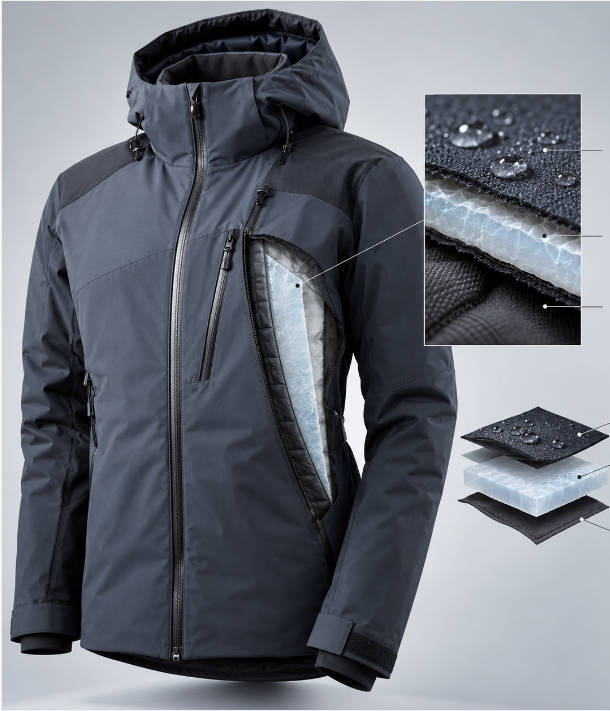
A control garment and an aerogel concept garment were arranged in this particular setup. Freeze the pattern and key materials, take a picture with placement of layers along by labeling each sample & agree on evaluation metrics before testing. A test plan for aerogel insulation for clothing can include thermal insulation, evaporative resistance, dimensions, weight (different from mobility), surface condition and wash durability performed without combining results gained with different builds. Take MOQ, sample charges, available material, tooling and test costs, lead time and production readiness in the same RFQ. For each answer, the amount must apply to an indicated development; a general number is not a project undertaking.
Match Aerogel Insulation to the Intended Jacket
Match Insulation Placement to the Use Case
The insulation layout is dictated by the intention of the jacket. Some urban styles may value low bulk and ease of motion less than others. A longer commuter coat may require full coverage through the torso while ensuring that the seat and sleeves retain flexibility. This compelled us to look rather closely at moisture transfer, packability and movement for the outdoors. If you are working on the outdoor designs, have to take a much closer look at moisture transport and packability & movement
Choose the layout against the finished product brief, not simply because the material is new. The same aerogel concept may not suit every jacket in a range.
Treat the Existing Range as Context, Not Aerogel Proof
Heavy-duty and super-light functional jackets with down or recycled-polyester filling, raincoats made from shell fabrics in eco-friendly or recycled finishes are all part of the outerwear range at INVIDIA TEXTILE. This provides a buyer context for a development conversation relevant to outerwear. This does not mean that an aerogel solution is viable or accessible. It does not justify that an aerogel alternative is suitable or accessible
Prepare an Aerogel Apparel Development Handoff
Send a Complete Buyer Brief
A buyer contacting us about an aerogel concept should include the intended style, target climate, layering system, weight and thickness goals, care label, test plan and expected order structure. A reference sample or marked insulation map can clarify the request.
Confirm Feasibility Before Making Performance Claims
Before staking a performance claim, we should validate material sourcing, process feasibility and sample stages with the commercial terms for that project. Hold all the approved sample, bill of materials, construction record and test reports together for decision making on production.
FAQ (questions fréquentes)
Question : Is aerogel automatically warmer than down or polyester insulation?
A: No. The material name cannot answer that. Compare finished garment systems with equivalent designs and report the test conditions.
Question : Does aerogel make a jacket breathable?
A: Not on its own. Breathability depends on the shell, insulation, lining and construction together. Compare evaporative resistance on the finished ensemble and review comfort during movement.
Question : How should buyers set a wash requirement?
A: Choose a care method and cycle count that fit the intended claim and expected use. Inspect the sample and, when relevant, repeat the same performance test after washing.
Question : Can INVIDIA TEXTILE provide a quotation immediately?
A: A useful quotation needs the material form, sourcing route, jacket construction, sample plan, testing scope and order details. INVIDIA TEXTILE needs to confirm aerogel capability and production readiness for the exact project first.
