
 +86-13634185427

2026 Fall/Winter Puffer Jacket Trends: 7 Styles Brands Should Source Now


For fall/winter 2026, a puffer jacket range has to do more than add insulation. Buyers are balancing visible fashion direction with shell performance, fill choices, color planning, and production risk. The most useful approach is to treat each style as a clear product brief: define the silhouette, document the puffer jacket materials, and request a sample that shows the intended texture. The seven directions below give brands a practical starting point without relying on unsupported market forecasts.

Why should brands source a Puffer Jacket for fall/winter 2026?
Which trend signals matter to a wholesale buyer?
Trend reports continue to show puffers moving between outdoor function and everyday styling. For a wholesale buyer, the useful signal is not a dramatic runway claim; it is a repeatable product idea that can be graded, costed, and photographed. A shorter fashion shape, a long winter coat, or a lighter transitional layer can each serve a different price and climate position. The buyer should decide the target customer, selling season, and intended activity before choosing a fill or finish.
What should be fixed before a winter jacket sample is requested?
The first brief should state body length, fit, quilting layout, shell, lining, filling, color, closure, pocket plan, and label requirements. It should also state whether the sample is intended to be lightweight, water resistant, wind protective, or simply fashion-led. A clear brief lets a factory compare the requested puffer jacket materials with the design rather than guessing what “warm” or “premium” means.
What are the first four insulated styles brands should source?
Is the cropped, boxy style still commercially useful?
A cropped, boxy shape gives a collection a strong fashion option with a shorter body and visible quilting. It works well when the range needs a lighter visual proportion, layered styling, or a younger capsule. The construction still needs enough ease for the intended underlayer, and the quilting scale should support the shape rather than create unwanted bulk at the hem.
Why source a longline or cocoon winter style?
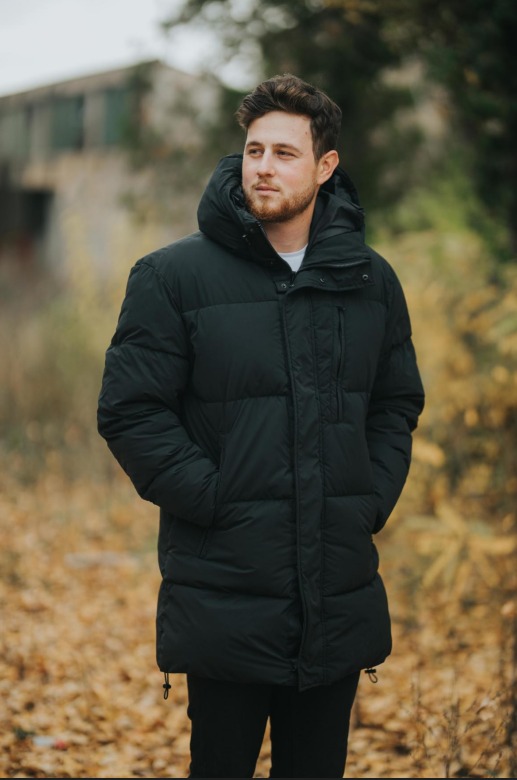
A longline or cocoon style provides more coverage and can become the anchor of a cold-weather assortment.
Long down jacket references in the verified product material show a straight, below-knee direction with a high collar, hood, pockets, and a relaxed silhouette.
Buyers should confirm finished length, hem handling, hood shape, and closure operation on a sample instead of assuming that a longer body automatically delivers a particular temperature rating.
Where does the lightweight four-season layer fit?
A lightweight four-season direction suits transitional weather, travel, and markets where customers need packable warmth rather than maximum volume.
Verified light-down product records describe a nylon shell, polyester lining, and a 90/10 down-and-feather filling, with customization available for size, color, and fabric.
The final range brief should still define the intended climate and layering system because “lightweight” is a construction goal, not a universal performance claim.
How can volume or quilting create differentiation?
Oversized quilting, wider channels, or a softly padded straight cut can create a recognizable silhouette without adding complicated trims.
Verified padded products include polyester shells or linings, polyester filling, and options described as breathable, water resistant, or wind protective.
Those descriptions apply to the documented constructions; buyers should request model-level confirmation before carrying the same language into every SKU.
Which three additional insulated directions complete a 2026 range?
Can a reversible quilted style improve a seasonal assortment?
A reversible puffer can give one product two coordinated visual stories, but both sides must be engineered as finished surfaces. Check seam appearance, label placement, pocket access, zipper reversibility, and colorfastness on both faces. A reversible concept is most useful when each side has a clear role, such as a quiet commercial color paired with a more expressive texture.
How do matte, shine and surface texture change the product story?
Surface finish changes how a puffer reads before a customer touches it. Matte shells can communicate a restrained, technical mood; controlled shine can make quilting more visible; crinkle or brushed effects can add tactile interest. A buyer should record the puffer jacket fabric name, fiber content, base construction, finish, and reference swatch. The puffer jacket texture should then be checked on both a flat swatch and a filled garment, because tension changes the final appearance.
What utility details make this jacket easier to wear?
Utility details often decide whether a fashion idea is practical.
Verified product descriptions include detachable hoods, nylon zippers, front and pocket zippers, and elastic cuffs.
Buyers should specify which details are essential, which are decorative, and which must be tested for repeated use. Pocket height, hood adjustment, cuff recovery, and collar coverage are especially important when the style is intended for daily outdoor wear.
What fabric, fill and texture decisions should sourcing teams document?
What fabric name should a buyer record for a puffer?
The useful fabric-material description identifies the shell and lining separately, then records the fill and finish.
Verified product records include nylon shells, polyester shells, polyester linings, 90/10 down-and-feather filling, and 100% polyester filling.
A material name should never imply a certification, waterproof rating, or recycled content unless that exact claim has been verified for the proposed style. Swatch references, hand-feel notes, weight, color standard, and finish should sit beside the name.
How should the finished texture be tested before approval?
The development team should compare the shell before quilting, after quilting, and after filling. Review noise, softness, surface reflection, wrinkle recovery, seam puckering, and how the texture behaves at cuffs, collars, and pockets. Sample comments should identify a specific change, such as a quieter shell or a flatter channel, rather than saying only “better quality.” This process keeps the selected materials connected to the finished product experience.

How can INVIDIA TEXTILE turn a 2026 puffer trend into a production brief?
At INVIDIA TEXTILE, we work with documented outerwear directions including down-filled, polyester-filled, lightweight, long, padded, and quilted constructions. We can discuss sizes, colors, fabrics, styles, labels, and logos from the buyer’s brief, then use material and fit feedback to guide sampling. Our role is to help a brand turn a trend reference into a specific Puffer Jacket request, while each performance statement remains tied to the approved material and construction.
Which insulated constructions can INVIDIA TEXTILE discuss with a brand?
We can review down and feather options, polyester-filled padded directions, long winter silhouettes, and lighter four-season layers that are present in the verified product range. The buyer can compare swatches and samples before approving the final combination of shell, lining, filling, quilting, and trims.
How does our customization support a supplier-ready brief?
Our customization discussion starts with the intended market, design references, sizes, colors, fabrics, and accessories. We clarify the sample route and approval points so development stays focused on the buyer’s range.
FAQ
Q: What is the most common material name for a Puffer Jacket?
A: There is no single material name for every style. A useful specification separates shell, lining, filling, and finish, such as nylon shell, polyester lining, down-and-feather fill, or polyester fill.
Q: Does surface texture affect the range position?
A: Yes. Matte, shiny, crinkle, smooth, and brushed surfaces can support different visual positions. The texture should be approved on a filled sample because quilting and tension can change the hand-feel and appearance.
Q: What should a brand send before requesting a Puffer Jacket sample?
A: Send the design reference, measurement chart, intended fit, length, quilting plan, shell and lining direction, filling preference, colors, trims, labels, logos, and any verified performance requirement. Clear inputs reduce avoidable sampling revisions.
