
 +86-13634185427

Seam-Taped vs Coated Jackets: Which Waterproof Construction Should Brands Choose?


Rainwear buyers often compare a seam-taped jacket with a coated shell as if the two labels describe the same level of protection. They do not. A coating treats a fabric surface, while taped or sealed seams address the needle holes created when panels are sewn together. For a private-label range, the right decision depends on exposure, design, closure details, target price and the tests written into the tech pack. This guide explains the difference without turning a construction term into an unsupported waterproof promise.
What Makes a Seam-Taped Jacket Different?
How Do Waterproof Jacket Taped Seams Block Leakage?
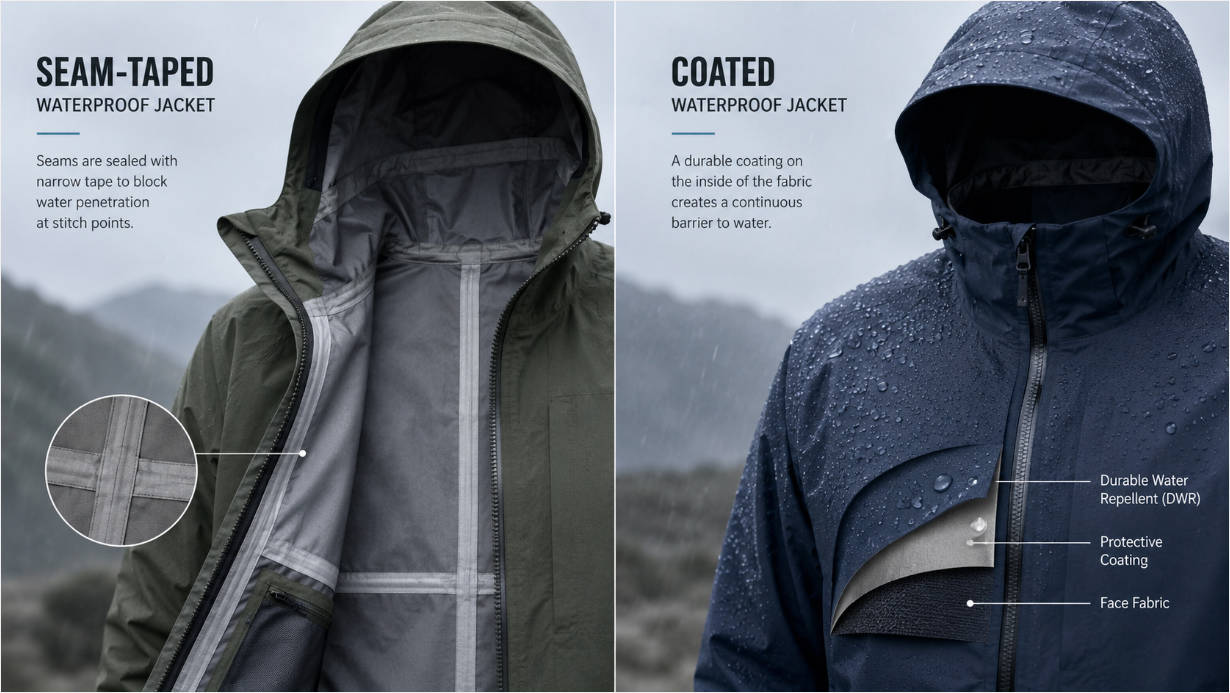
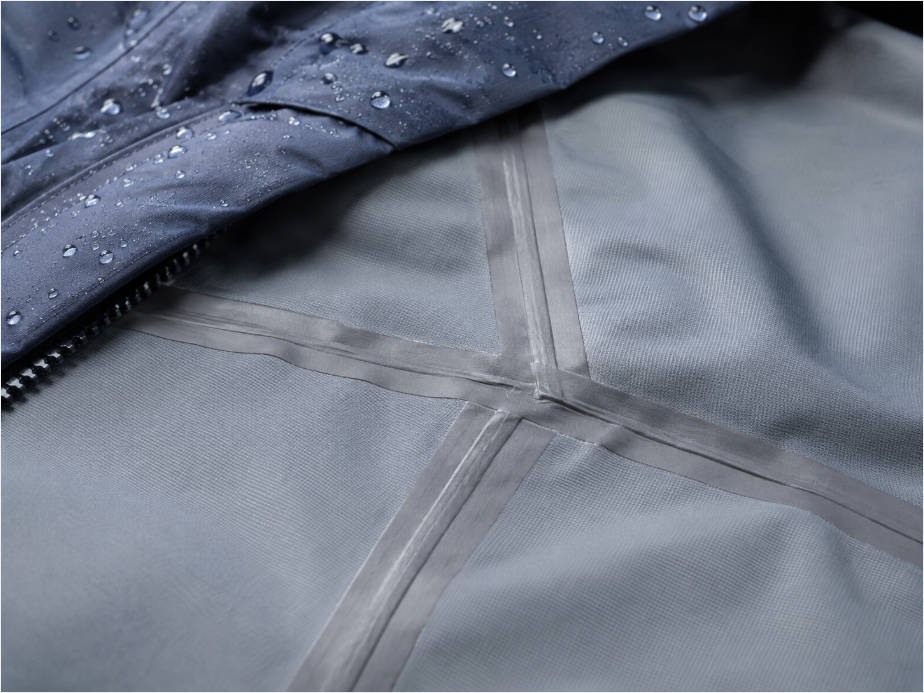
Stitching joins two panels but also creates a line of small punctures. In waterproof jacket taped seams, a compatible tape is applied over the inside of the stitched line so the openings are covered. The tape path must follow the seam map and remain stable through the garment’s movement. Corners, pocket openings, hood joins and hem transitions deserve special attention because a short unprotected section can interrupt an otherwise careful construction.
What Does Seam Sealed Mean on a Production Spec?
Seam sealed normally means a seam has received a sealing treatment, but a buyer should ask which seams are included. A seam sealed jacket may have all seams sealed, only critical seams sealed, or a specified combination of tape and liquid sealant. The tech pack should show the coverage, tape position, seam allowance and closure interfaces. This prevents a factory and a brand from using the same phrase for different production scopes. It also keeps the final care label and product copy aligned with what was actually approved.
When Do Coated Jackets Make More Sense?
How Does a Coated Outer Shell Protect the Garment?
A coated shell places a finish on the fabric face or reverse side. Verified INVIDIA TEXTILE outerwear directions use nylon or polyester shells and describe water-resistant, windproof or bionic finishes. Those finishes can support a weather-ready brief, but the coating does not automatically close every stitched joint. Buyers should therefore specify shell fabric, lining, finish position, breathability expectation and seam treatment as separate fields. A coated jacket can be commercially sensible when the silhouette is simpler and the brief does not require extensive seam-level engineering, provided the finished garment is validated. A seam-taped jacket remains the alternative when the seam map is the primary risk control.
Is a Seam Sealed Jacket Always More Waterproof Than a Coated One?
No construction name proves a result on its own. A seam sealed jacket can still have leakage paths at zippers, drawcord exits, pockets or damaged tape. Conversely, a coated shell may perform well for a light rain brief when the seams and closures are appropriately designed. The useful comparison is system versus system: fabric finish, seam process, pattern, zipper, hood, cuff and hem must work together. Use seam-tape waterproofing as a construction objective, not as a substitute for agreed testing. No project-specific hydrostatic rating is available here, so a buyer should add the required test method and pass criteria before sampling.
How Should Brands Specify Waterproof Seam Tape for a Jacket?
Which Seam Tape Waterproof Details Belong in the Tech Pack?
When a buyer searches for seam tape waterproof solutions, the practical question is specification. Mark every seam that needs treatment, identify inside or outside application, show intersections and corners, and note how the tape meets zippers, elastic cuffs, drawcords and hems. Confirm the tape construction, color, appearance and allowable overlap with the factory before a prototype is cut. The exact width, adhesive chemistry and application temperature must be confirmed for the selected fabric; none should be assumed from a generic product description. A visual seam map is often more useful than a broad statement such as “fully waterproof.”
How to Make a Jacket Waterproof Without Overpromising?
The honest answer to how to make a jacket waterproof is to control the complete garment. Start with a shell and lining that suit the intended use, select the finish, engineer the seam map, close openings with appropriate zippers or flaps, then inspect the approved sample. MISUNNELSESFULL TEKSTIL‘s documented development flow covers material procurement, counter or fit samples, pre-production samples and production-line inspections. A sealed seams jacket should be reviewed at each gate for tape adhesion, clean intersections, puckering, closure alignment and the care process that will be printed on the label. Marketing language should wait until the agreed validation is complete. This is the same discipline expected when developing a seam-taped jacket for a private label.
Which Waterproof Construction Fits the Product Brief?
When Is a Seam-Taped Jacket the Better Brief?
Choose a seam-taped jacket brief when the product will face repeated rain exposure, complex paneling or technical details that make seam-level control important. The decision is especially relevant for hoods, articulated sleeves, pocket bags and long seam runs. It may require more development time, but it gives the team a clear map of where protection is expected.
The verified project range includes a kids’ raincoat direction described with seam-taped seams; that evidence should not be expanded into a claim about every outerwear style. Brands seeking a seam-taped jacket should keep the construction map with the approved sample.
When Can a Coated Route Deliver the Right Commercial Balance?
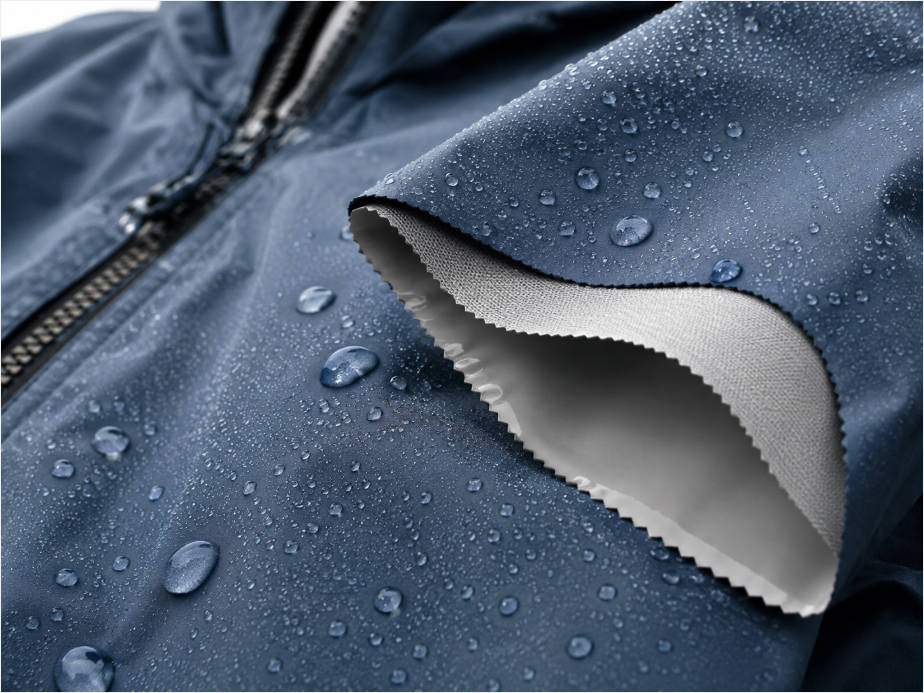
A coated route may fit a lighter weather layer, a clean silhouette or a price-sensitive assortment where the buyer’s performance brief is narrower. It can also be combined with selective seam sealing at high-risk points. The choice should be made after reviewing fabric hand, finish durability, closure design, order quantities and test requirements. If the buyer needs a fully protected technical shell, a combined route may be more appropriate than relying on a coating alone. The important commercial control is a written brief that connects each feature to a user need.
How Does INVIDIA TEXTILE Support Custom Waterproof Outerwear?
What Can INVIDIA TEXTILE Customize for a Seam-Sealed Program?
We help brands develop outerwear around a defined fabric, style and market brief. Our verified customization scope includes sizes, colors, fabrics, styles, labels and logos, with material swatches available for selection. For a seam-sealed program, we review the seam map and closure details with the buyer rather than assuming that one construction fits every garment.
How Do We Move From Sample to Approved Sealed Seams Jacket?
We begin with the inquiry and product plan, prepare materials, make counter or fit samples, and move to a pre-production sample after the correct fabric and accessories are approved. We then carry out production inspections before delivery. A brand can bring an original sample, sketch or photo and receive a specification-led development discussion for a sealed seams jacket. Final claims remain tied to the approved construction and agreed checks.
FAQ
Q: Are taped seams enough to call a jacket waterproof?
A: No. A seam-taped jacket still needs compatible shell fabric, protected closures, sound pattern engineering and agreed validation. Taping addresses stitched joints; it does not prove the performance of the whole garment.
Q: What should a buyer specify for waterproof seam tape for a jacket?
A: Provide a seam map, tape coverage, intersections, closure interfaces, appearance requirements and approval criteria. Confirm the exact tape and application settings with the factory for the selected fabric.
Q: How can a factory help with how to make a jacket waterproof?
A: A capable factory coordinates fabric selection, seam treatment, closures, samples and inspections. We can review those inputs through the INVIDIA TEXTILE development process, while the buyer confirms the final test requirements.
