
 +86-13634185427

Double Faced Wool Coat: Construction, Quality and Sourcing Guide


A double faced wool coat is defined by more than a soft handle or an unlined appearance. Its value depends on the structure of the fabric, the way seams and edges are finished, and the controls used to keep those details consistent in bulk production. For private-label buyers, this creates a sourcing task that begins with fabric evidence and ends with an approved production sample. The following guide focuses on construction, material evaluation, style planning and quality control so teams can compare proposals without relying on vague luxury language.
How Is a Double Faced Wool Coat Constructed?
What Does Double-Faced Construction Mean?
Double-faced material presents two usable faces, but the method used to create that structure can differ between fabric options. A buyer should examine the swatch face, reverse and cut edge, then ask the supplier to identify the fiber composition and construction. The term does not automatically mean that the garment is reversible, unlined or made from a particular wool percentage. Those decisions belong in the specification. The coat can use the two surfaces as a design feature, yet the final appearance still depends on pattern engineering, seam choice, pressing and trim placement.
Why Do Seams and Edges Matter in a Double Faced Wool Coat?
When both sides of a material are intended to look presentable, exposed allowances and conventional overlocking may undermine the design. Some constructions separate the fabric layers near an edge so the allowances can be turned inward and finished cleanly; the exact method must match the selected cloth. Buyers should review lapels, front edges, vents, cuffs, pockets and hem transitions on the sample. Even spacing, balanced thickness and clean corners are more useful quality indicators than a general claim that the coat is handmade or labor intensive.
How Should Buyers Evaluate Double Faced Wool Coating Fabric?
Which Composition, Weight and Hand-Feel Checks Matter?
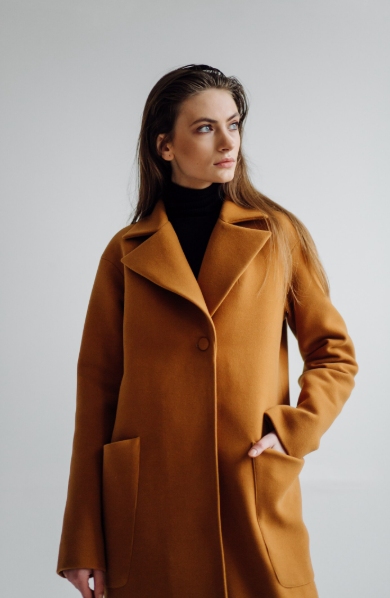
The evaluation of double faced wool coating fabric should start with a written material specification. Record the fiber percentages, fabric weight, width, color standard and any finish that affects appearance or care. Then compare thickness, drape, recovery, surface uniformity and the relationship between the two faces. The material should be viewed flat, folded and sewn because a swatch alone cannot show how a collar or pocket edge will behave. Approval should identify the exact sampled fabric rather than treating “double-faced” as a complete specification.
Are Wool Coats Warm Without Heavy Padding?
The short answer to are wool coats warm is that wool can support insulation, but warmth is a garment-system result. Wool fibers have natural crimp that can trap still air. Fabric density and thickness affect that air layer, while coat length, closure, fit, wind exposure and the wearer’s underlayers affect real use. A light, open-front style will not perform like a denser, longer design simply because both contain wool. Buyers should define the intended climate and compare finished samples instead of assigning a universal temperature rating to a double faced wool coat.
Which Wool Coat Styles Suit Double-Faced Construction?
Which Types of Wool Coats Use the Fabric Best?
The right types of wool coats are those that use the material’s two faces deliberately. A wrap coat can create a clean, fluid front without adding many closures. A tailored style can emphasize sharp lapels and controlled edges, provided the cloth supports pressing and structure. A relaxed silhouette can highlight drape, while a reversible concept requires both sides, closures, pockets, labels and seam finishes to work in either orientation. These are design directions, not automatic properties of the fabric. The selected wool coat styles should be tested through patterns and samples before a range is committed.
How Should a Winter White Wool Coat Be Specified?
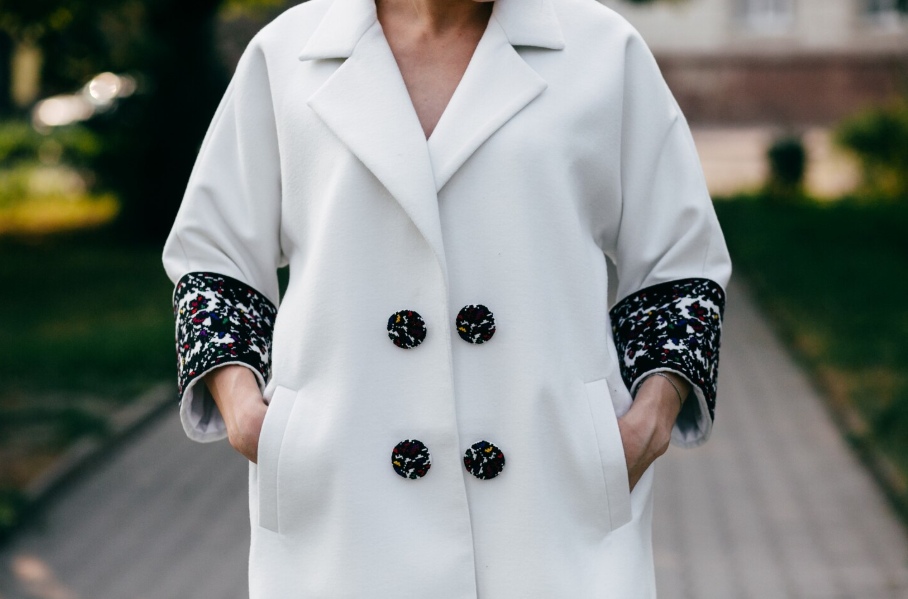
A winter white wool coat needs a precise color standard because small shade differences are easier to notice across broad, pale panels. Buyers should approve the face and reverse under consistent viewing conditions and compare body fabric, thread, labels, buttons and any visible interfacing. The sample review should also look for marks introduced during cutting, pressing or handling. No generic stain-resistance promise should be assumed. Packaging and production handling can be defined after the team identifies the risks of the actual fabric and finish.
What Quality Checks Protect a Double Faced Wool Coat Order?
What Must Be Approved Before Bulk Cutting?
Before bulk cutting, the buyer should approve the fabric, color, measurements, fit, seam construction, edge finish, pressing result, labels and trims in one coherent reference. The pre-production sample should use the correct bulk fabric and accessories so the factory is not asked to infer key details from an earlier prototype. The quality plan can then identify checkpoints for panel matching, seam balance, pocket position, lapel symmetry, edge thickness and surface condition. This makes the double faced wool coat specification measurable without inventing universal tolerances.
Can a Brand Claim an Eco Friendly Wool Coat?
A brand should not describe a product as an eco friendly wool coat solely because wool is a natural fiber. Environmental language must match evidence for the actual material and process. Useful records may include verified fiber content, supplier documentation, applicable certifications and traceability information, but the required evidence depends on the exact claim and sales market. If those documents are unavailable, the safer copy is factual: state the approved composition and construction without implying a broader environmental benefit.
How Can INVIDIA TEXTILE Develop a Custom Double Faced Wool Coat?
What Can We Customize for a Wool Coat Program?
At INVIDIA TEXTILE, we can organize a custom coat brief around requested fabrics, wool coat styles, sizes, colors, labels and logos. Our team reviews the intended market and design inputs before material sourcing and sampling. Because double-faced availability and composition vary by proposal, INVIDIA TEXTILE confirms the selected material during development rather than promising a standard specification. This gives buyers a documented basis for reviewing a custom double faced wool coat.
How Do We Move From Fabric Review to Bulk Production?
We begin with product planning and material procurement, then prepare a counter or fit sample for evaluation. Revisions can address silhouette, measurements and construction before the pre-production sample is made with the approved fabric and accessories. Production-line inspections can compare bulk workmanship with that reference before delivery. INVIDIA TEXTILE uses these approval stages to keep fabric decisions, visible finishing and production expectations connected.
FAQ
Q: Are Wool Coats Warm Enough for Winter?
A: They can be, but fiber name alone is not enough. Evaluate fabric density and thickness together with length, closure, wind exposure, fit and layering for the intended climate.
Q: How Do You Verify Double Faced Wool Coating Fabric?
A: Confirm fiber content, weight, width, color, construction and finish, then inspect both faces and a sewn sample. The approved material should be identifiable in the production specification.
Q: What Supports an Eco Friendly Wool Coat Claim?
A: The claim needs documentation relevant to the chosen material, process and market. Without suitable evidence, publish the verified composition and construction instead of making a broad environmental statement.
